

The Mystery of Skeleton Lake: The Untold Story of Roopkund

The Mystery of Skeleton Lake: The Untold Story of Roopkund
High in the remote Garhwal Himalayas of Uttarakhand lies a lake unlike any other in the world. Hidden beneath snow for most of the year, Roopkund Lake, popularly known as Skeleton Lake, has fascinated explorers, scientists, historians, and trekkers for decades.
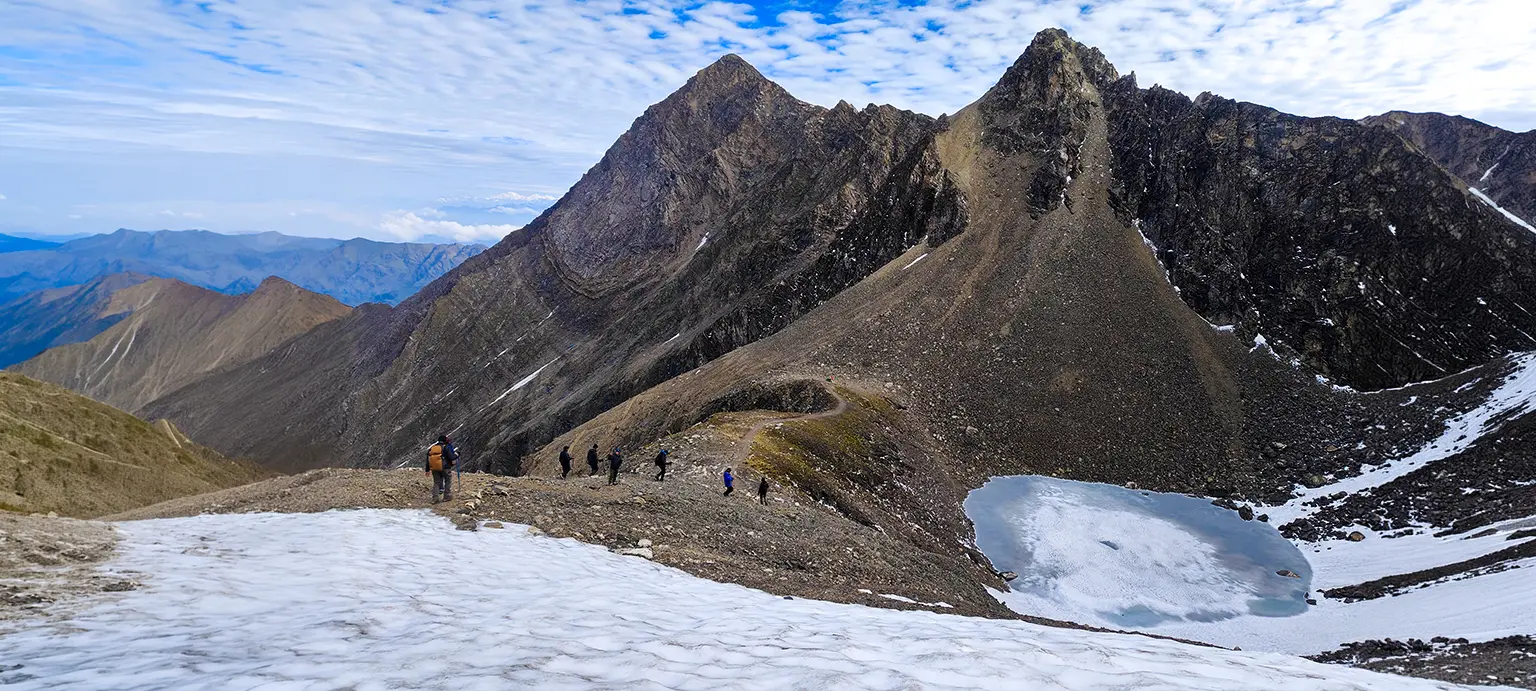
At an altitude of approximately 15,700 ft ≈ 4,785 m, this small glacial lake looks peaceful from a distance. However, once the snow begins to melt, an extraordinary and mysterious sight appears—hundreds of ancient human skeletons scattered around the lake and visible beneath its crystal-clear icy water.
Who were these people? Why did they travel to such a remote Himalayan location? What caused the deaths of so many individuals?
Even after decades of archaeological studies and modern DNA research, many questions remain unanswered. That is exactly what makes the Mystery of Skeleton Lake one of the greatest unsolved mysteries in India.
In this guide, we’ll explore the history of Roopkund, the scientific discoveries, the local legends, and the latest research that continues to keep this Himalayan mystery alive.
What is Skeleton Lake?
Roopkund is a small glacial lake located in the Chamoli district of Uttarakhand, deep within the Garhwal Himalayas. Although the lake is only about 40 meters in diameter, it has gained international fame because of the hundreds of human skeletons found around its shores.
Every summer, as the snow and ice melt, bones, skulls, wooden objects, leather footwear, jewelry, and other artifacts emerge from beneath the frozen surface. The chilling sight has earned Roopkund the nickname “Skeleton Lake.”
Unlike many archaeological sites, these remains have been naturally preserved for centuries because of the freezing temperatures and high-altitude environment.
Where is Roopkund Located?
Roopkund lies within the Nanda Devi Biosphere Reserve in Uttarakhand and is surrounded by some of the most breathtaking Himalayan landscapes.
The traditional trekking route passes through:
- Lohajung
- Didina Village
- Ali Bugyal
- Bedni Bugyal
- Patar Nachauni
- Kalu Vinayak
- Bhagwabasa
- Roopkund Lake
The journey offers spectacular views of famous Himalayan peaks such as Mt. Trishul, Nanda Ghunti, and Mrigthuni, making it one of India’s most scenic high-altitude trekking routes.
The Discovery That Shocked the World
Although local villagers and shepherds had known about the mysterious lake for generations, the outside world became aware of Roopkund in 1942.
British forest ranger H. K. Madhwal discovered hundreds of skeletons after the snow melted around the lake.
At first, British officials suspected that the remains belonged to Japanese soldiers from World War II. However, scientific examinations quickly proved this theory incorrect.
Carbon dating revealed that many of the skeletons were several centuries old, opening the door to one of the world’s greatest archaeological mysteries.
How Many Skeletons Have Been Found?
Researchers estimate that 500 to 800 human skeletons have been found in and around Roopkund Lake.
The freezing climate helped preserve not only bones but also several personal belongings, including:
- Leather shoes
- Wooden walking sticks
- Bamboo artifacts
- Bangles
- Rings
- Iron weapons
- Clothing fragments
These discoveries have provided valuable clues about the people who once traveled through this remote Himalayan region.

Theories Behind the Mystery
For decades, experts proposed several explanations for the mysterious deaths.
The Lost Army Theory
One of the earliest theories suggested that the skeletons belonged to an invading army that perished in the mountains.
However, the absence of military equipment, weapons, and armor ruled out this possibility.
The Epidemic Theory
Another theory claimed that a deadly disease wiped out an entire group of travelers.
But forensic examinations found no convincing evidence of widespread illness.
The Avalanche Theory
Some believed an avalanche caused the tragedy.
While this seemed possible in the Himalayan environment, the injuries found on the skulls did not match those typically caused by avalanches.
Scientists continued searching for another explanation.
The Hailstorm Theory
The most widely accepted scientific explanation today is the hailstorm theory.
Detailed forensic studies found that many skulls had deep circular fractures, while the rest of the skeleton remained largely undamaged.
These injuries are consistent with being struck by extremely large hailstones, some possibly as big as cricket balls.
Researchers believe that a group of travelers became trapped above the tree line during an unusually violent Himalayan storm. With no shelter available, many died from repeated blows to the head.
Interestingly, this scientific explanation closely matches local folklore that speaks of a devastating hailstorm sent by the goddess Nanda Devi.
Modern DNA Research Changed the Story
For many years, scientists assumed that everyone died during a single tragic event.
However, modern DNA analysis completely changed that understanding.
Researchers discovered that the skeletons belonged to multiple groups of people who lived during different periods.
Some individuals had South Asian ancestry, while others had genetic links to the eastern Mediterranean region.
This remarkable discovery suggests that Roopkund witnessed multiple historical events rather than a single disaster.
Even today, researchers cannot fully explain why people from distant regions traveled to this isolated Himalayan lake.
The Legend of Goddess Nanda Devi
Science offers one explanation, but local tradition tells another.
According to a centuries-old legend, a king, his queen, dancers, and attendants were traveling through the mountains on a pilgrimage dedicated to Goddess Nanda Devi.
It is believed that members of the royal procession behaved disrespectfully in the sacred region.
Angered by their actions, the goddess sent a powerful hailstorm that killed everyone in the group.
Whether this legend is history or folklore remains uncertain, but it has become an important part of the cultural identity of Roopkund.
Why Roopkund Fascinates the World
Very few places on Earth combine archaeology, history, mythology, genetics, and adventure quite like Roopkund.
The lake has attracted:
- Archaeologists
- Historians
- Scientists
- Documentary filmmakers
- Adventure trekkers
- Mystery lovers
- Photographers
Its unique story has been featured in numerous documentaries, books, and scientific publications around the world.
Can You Visit Roopkund Today?
Because Roopkund lies within a fragile Himalayan ecosystem, trekking regulations have changed over the years to help protect the environment and archaeological remains.
Before planning a trip, always check the latest government guidelines, forest permissions, and route availability.
Protecting this unique heritage site is essential for future generations.
Interesting Facts About Skeleton Lake
- Roopkund is situated at approximately 15,700 feet above sea level.
- Hundreds of skeletons become visible after the snow melts.
- Some remains are over 1,000 years old, while others belong to later periods.
- The lake stays frozen for most of the year.
- It is one of India’s most famous archaeological discoveries.
- DNA research revealed that the skeletons belong to different groups of people.
- The hailstorm theory is currently the strongest scientific explanation for many of the ancient deaths.
- Local folklore continues to connect the lake with Goddess Nanda Devi.
Why the Mystery Still Remains Unsolved
Despite advances in archaeology, forensic science, and genetics, Roopkund continues to challenge researchers.
Questions that remain unanswered include:
- Why did people from different regions travel here?
- Why did multiple groups visit this remote lake centuries apart?
- Were all the deaths caused by natural disasters?
- What historical events brought these travelers into the high Himalayas?
Until more evidence is discovered, Skeleton Lake will remain one of the world’s greatest archaeological mysteries.
Responsible Tourism
If you plan to explore the Roopkund region, remember that it is both an environmentally sensitive area and an important archaeological site.
Responsible trekkers should:
- Never disturb skeletal remains.
- Avoid littering.
- Stay on marked trails.
- Respect local traditions and sacred places.
- Follow forest department regulations.
- Trek only with experienced and authorized guides.
Responsible tourism helps preserve this extraordinary destination for researchers, trekkers, and future generations.
Conclusion
The Mystery of Skeleton Lake is much more than the story of ancient bones lying beside a frozen Himalayan lake. It is a fascinating combination of history, science, archaeology, mythology, and adventure that continues to captivate people around the world.
Although modern research has answered some important questions, many mysteries remain unsolved. Who were these travelers? Why did they come here? And what really happened on those fateful journeys through the Himalayas?
Perhaps Roopkund will reveal its final secrets one day. Until then, Skeleton Lake remains one of India’s most extraordinary and unforgettable mysteries—a place where nature, history, and legend come together in the heart of the Himalayas.

Frequently Asked Questions (FAQs)
Why is Roopkund called Skeleton Lake?
Because hundreds of ancient human skeletons become visible around the lake after the snow melts each year.
How old are the skeletons?
Many of the remains are more than 1,000 years old, while others belong to different historical periods.
What caused the deaths?
Scientists believe many individuals died during an extremely severe hailstorm, although not all the skeletons belong to the same event.
Is Roopkund Trek open?
Trekking regulations change from time to time due to environmental conservation efforts. Always check the latest official updates before planning your journey.
Is Skeleton Lake haunted?
There is no scientific evidence that Roopkund is haunted. Its mysterious reputation comes from the ancient skeletons, fascinating legends, and centuries of unanswered questions.