
Valley of Flowers Trek 2026 — The Complete Beginner’s Guide
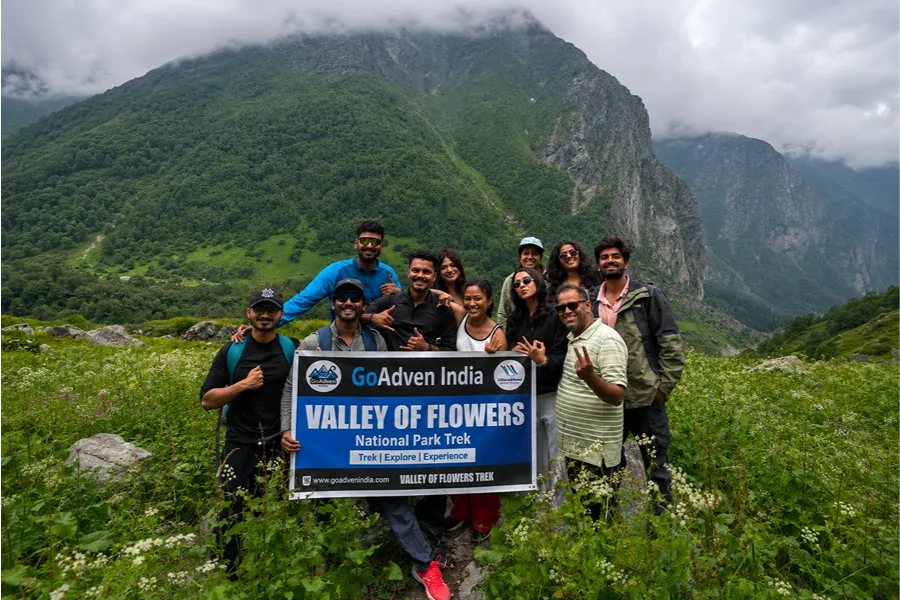
Have you ever scrolled through Instagram and stopped dead on a photo of a valley completely covered in wildflowers — pink, purple, blue, yellow — with snow-capped mountains in the background? And then thought… “Wait, is that even real? Is that in India?”
Yes. It is real. And yes, it is in India.
That place is called the Valley of Flowers, and it’s one of those destinations that genuinely changes people. Not in a dramatic way. But in that quiet, “I needed this more than I realized” kind of way.
If you’ve never heard of it before, don’t worry. This guide is written exactly for you — someone who is curious, maybe a little nervous, and wondering if this trek is actually doable. By the time you finish reading, you’ll know everything: what the Valley of Flowers is, how to get there, what it costs, when to go, and whether you — yes, you, the person who hasn’t trekked before — can actually do it.
Let’s start from the beginning.
What Exactly Is the Valley of Flowers?
The Valley of Flowers is a high-altitude alpine meadow tucked away in the Chamoli district of Uttarakhand, in the Western Himalayas. It sits at an elevation between 3,352 to 3,658 meters (roughly 11,000 to 12,000 feet) above sea level.
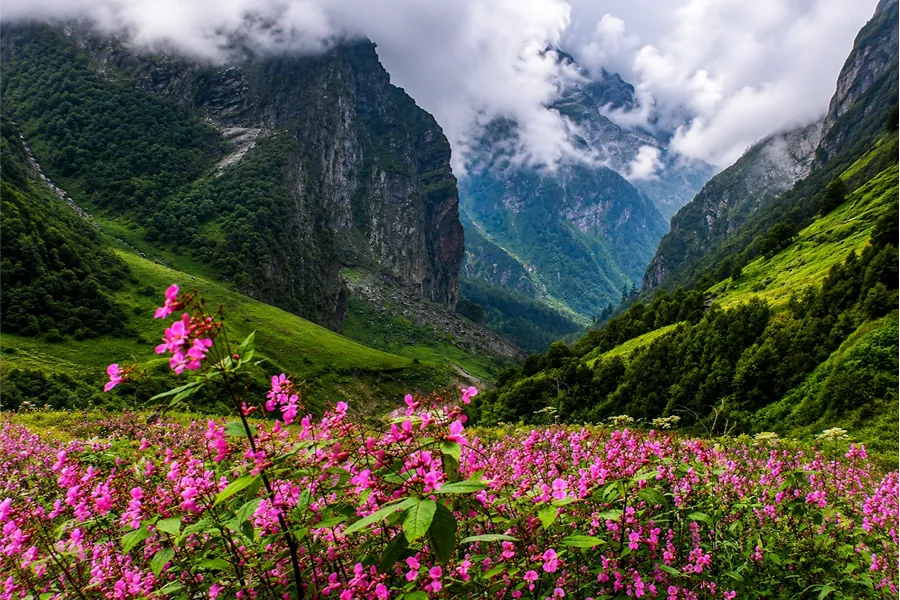
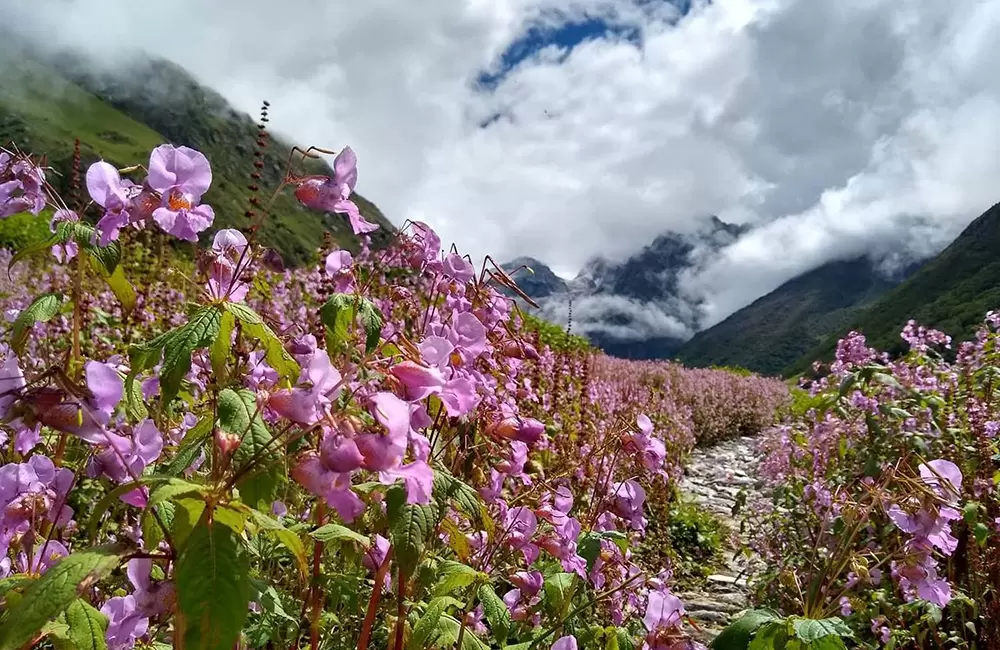
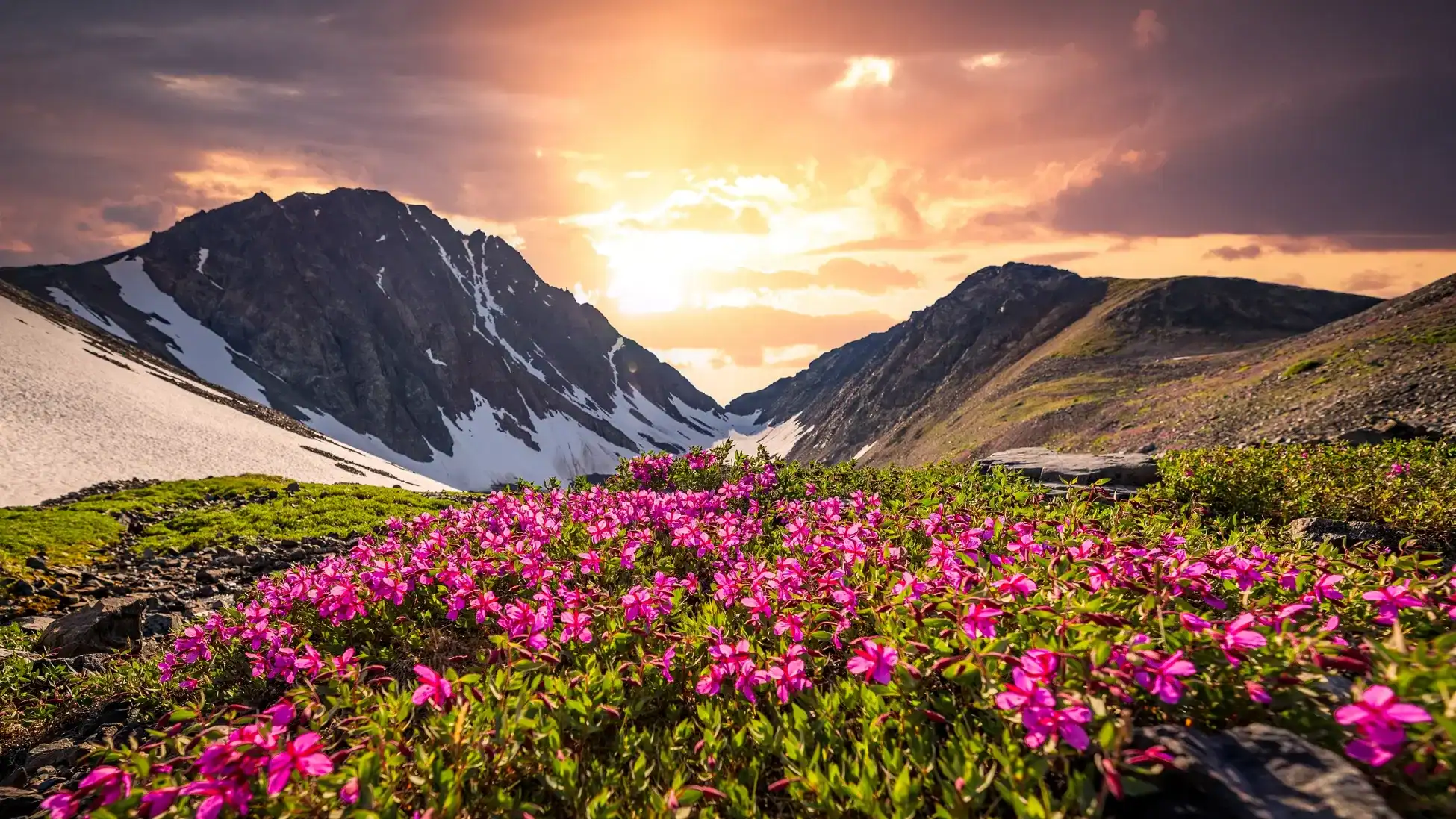
Every year, from June to September, this valley transforms into something out of a fairy tale. Over 600 species of wildflowers bloom here — covering every inch of the valley floor in colors you didn’t even think existed in nature. We’re talking about rare flowers like the Blue Poppy, the sacred Brahma Kamal, Cobra Lily, Primula, and hundreds more.
In 1982, the Indian government declared it a National Park. And in 2005, UNESCO added it to its World Heritage Sites list — making it one of the most ecologically important places on the planet.
But here’s the thing most travel articles don’t tell you: the Valley of Flowers isn’t just about flowers. It’s about the feeling of being in a place so untouched, so quiet, and so far from city life that you actually breathe differently. You slow down. You look up. You notice things.
That’s what makes it special.
A Little History — How Was It Discovered?
Here’s a fun fact that most people don’t know.
The Valley of Flowers was completely unknown to the outside world until 1931. That year, a British mountaineer named Frank S. Smythe and his team were descending from a Himalayan expedition when they got lost in bad weather. While trying to find their way back, they accidentally stumbled upon this hidden valley — and were so overwhelmed by what they saw that Smythe named it the “Valley of Flowers” on the spot.
He later wrote a book about it. The world took notice. And the rest, as they say, is history.
Locals in the region, however, had known about this valley for centuries. In Hindu mythology, it is believed that Lord Hanuman collected the life-saving Sanjeevani herb from these very hills to revive Lakshman during the battle in the Ramayana. The valley has always been considered sacred — and once you stand in it, you’ll understand why.
Is the Valley of Flowers Trek Good for Beginners?
This is the most common question we get. And the honest answer is: Yes, absolutely.
The Valley of Flowers trek is one of the most beginner-friendly treks in the entire Himalayas. Here’s why:
The trail is well-marked. You won’t need to navigate through unmarked jungle paths. The route is clear, used by thousands of trekkers every season, and well-maintained by forest authorities.
The distances are manageable. The longest trekking day is around 9–11 km, which takes 4–5 hours at a comfortable pace. You’re not doing 20 km death marches here.
The altitude gain is gradual. Unlike some Himalayan treks where you shoot up thousands of meters in a day, this trek lets your body adjust slowly. Most people handle the altitude just fine.
There are guesthouses and dhabas along the route. You won’t be camping in the wild (unless you want to). Hot food, basic beds, and even phone charging points are available at Ghangaria, the base camp.
Families, students, older trekkers — everyone does this. We’ve taken groups ranging from 15-year-old students to 60-year-old grandparents. If you can walk for 4–5 hours at a slow pace without stopping every 10 minutes, you can do this trek.
The difficulty level is Moderate — meaning it’s not a casual stroll, but it’s also not Everest. Some uphill stretches will make your legs burn. The Hemkund Sahib climb (which most trekkers combine with Valley of Flowers) is genuinely steep and tiring. But nothing that a person with basic fitness can’t handle.
Where Exactly Is Valley of Flowers — And How Do You Get There?
Valley of Flowers Location: Chamoli District, Uttarakhand, India
The nearest major towns are Joshimath and Govindghat — both easily accessible from Rishikesh and Haridwar.
Here’s the typical route most people take:
From Delhi/ Haridwar/ Rishikesh
Delhi → Haridwar/Rishikesh → Joshimath → Govindghat → Pulna → Ghangaria → Valley of Flowers
- Delhi to Rishikesh: ~250 km, about 5–6 hours by road or overnight train
- Rishikesh to Joshimath: ~250 km, about 8–9 hours by road (scenic mountain drive)
- Joshimath to Govindghat: 25 km, about 45 minutes
- Govindghat to Pulna: 4 km jeep ride (or walk)
- Pulna to Ghangaria: 9 km trek (4–5 hours)
- Ghangaria to Valley of Flowers: 4 km trek (1.5–2 hours)
Most trekkers cover this in 6 days total — 2 days of travel + 4 days of trekking + sightseeing.
How to Reach Rishikesh:
- By Train: Haridwar Railway Station is the nearest major railhead. Trains from Delhi take 4–5 hours.
- By Bus: Overnight Volvo buses from Delhi ISBT to Rishikesh/Haridwar are very comfortable and affordable.
- By Flight: Jolly Grant Airport in Dehradun is the nearest airport, about 45 minutes from Rishikesh.
The Valley of Flowers Trek Route — Day by Day
Here’s a simple breakdown of how a standard 6-Day Valley of Flowers Trek looks:
Day 1 — Delhi / Haridwar to Joshimath
Travel day. Board an overnight bus or drive early morning. You’ll pass through stunning Himalayan towns — Devprayag, Rudraprayag, Karnaprayag, Nandaprayag. Each of these is a sacred river confluence. Arrive at Joshimath by evening. Rest well.
Overnight stay: Joshimath
Day 2 — Joshimath → Govindghat → Ghangaria (Trek Begins!)
Drive 25 km from Joshimath to Govindghat. Take a short jeep ride to Pulna village (4 km). From Pulna, the trek begins. The trail follows the beautiful Pushpavati River, passing through dense forests, small waterfalls, and the scenic Bhyundar Valley. After 9 km (4–5 hours), you reach Ghangaria — your base camp for the next few days.
Overnight stay: Ghangaria
Day 3 — Ghangaria to Valley of Flowers and Back
Wake up early and head out. The 4 km trail from Ghangaria to the Valley of Flowers takes about 1.5–2 hours. You’ll cross the rushing Pushpavati River and pass by the beautiful Laxman Waterfall on the way. Then — the valley opens up in front of you.
Words honestly don’t do justice to what you see. A carpet of wildflowers stretching as far as you can see, framed by peaks covered in snow. Spend 3–4 hours exploring the valley. Entry closes at 12 PM, so start early. Return to Ghangaria by evening.
Overnight stay: Ghangaria
Day 4 — Ghangaria to Hemkund Sahib and Back
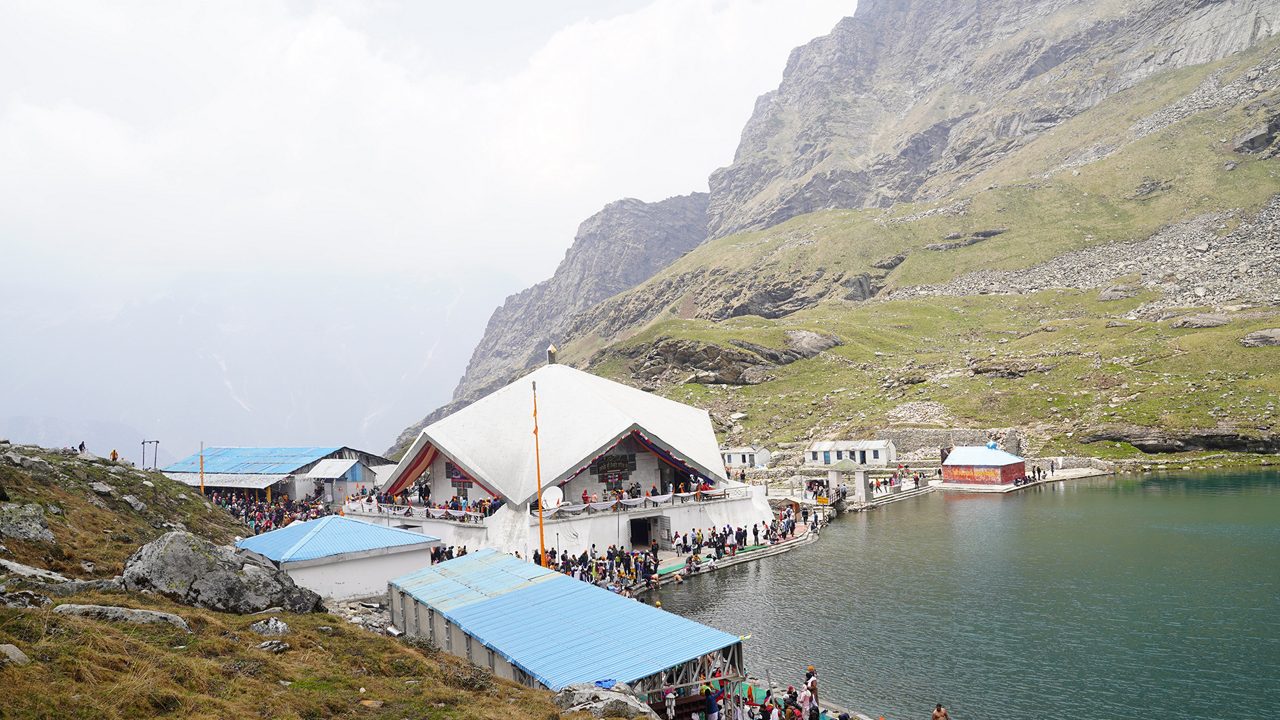
This is the tough one. Hemkund Sahib is the world’s highest Gurudwara, sitting at 4,329 meters (14,200 feet) beside a crystal-clear glacial lake. The 6 km trail from Ghangaria is steep — genuinely so. But once you reach the top, the view of the seven snow-capped peaks reflected in the lake, with the golden dome of the Gurudwara gleaming in the morning sun… it’s something you’ll carry with you for the rest of your life.
Have langar (free community meal) at the Gurudwara. Take blessings. Trek back down to Ghangaria.
Overnight stay: Ghangaria
Day 5 — Ghangaria to Govindghat → Drive to Joshimath or Rishikesh
Trek back down to Govindghat (9 km, 3–4 hours). Take a jeep to Govindghat, then drive toward Joshimath or continue to Rishikesh depending on your return plan.
Overnight stay: Joshimath or on the way
Day 6 — Return to Delhi/ Rishikesh/Haridwar
Drive from Rishikesh/Haridwar back to Delhi. Trek officially ends with tired legs and a very full heart.
Best Time to Visit Valley of Flowers in 2026
The Valley of Flowers opens on June 1, 2026 and closes around October 31, 2026.
But not every month is the same. Here’s the honest breakdown:
| Month | What You’ll See | Our Rating |
|---|---|---|
| June | Early blooms, snow patches, fewer crowds | ⭐⭐⭐ Good |
| July | Valley wakes up, flowers start exploding in color | ⭐⭐⭐⭐ Great |
| Mid-July to August | PEAK BLOOM — 600+ species, riot of color, blue poppies everywhere | ⭐⭐⭐⭐⭐ Best! |
| September | Fewer flowers but crystal clear skies, amazing mountain views | ⭐⭐⭐⭐ Beautiful |
| October | Most flowers gone, valley preparing for winter | ⭐⭐ Visit only for views |
Our honest recommendation: If you want to see the valley at its most breathtaking, go between mid-July and mid-August 2026. This is when the Brahma Kamal blooms, the Blue Poppies are in full swing, and the entire valley looks like someone spilled a paint palette across the mountains.

Valley of Flowers Entry Fee & Permits (2026)
You need a Forest Entry Permit to enter the Valley of Flowers National Park. Here’s what it costs:
- Indian Nationals: ₹150 per person per day
- Foreign Nationals: ₹600 per person per day
- Camera Fee: ₹500 (for professional cameras — basic phone cameras are free)
The permit is issued at the entry gate at Ghangaria. Carry your Aadhaar card or any government ID — it’s mandatory.
One important thing: Entry to the valley closes at 12:00 PM every day. No one is allowed to enter after noon. So start your trek from Ghangaria by 6:00–7:00 AM. The gate closes at 5:00 PM in the evening — you must be back before then.
Valley of Flowers Trek Cost — How Much Should You Budget?
This is where people get confused because prices vary wildly depending on how you travel. Let’s break it down simply.
If You Go Independently:
- Delhi to Rishikesh (bus/train): ₹300–₹800
- Rishikesh to Joshimath (shared taxi/bus): ₹400–₹600
- Govindghat to Pulna (jeep): ₹100
- Accommodation in Ghangaria (per night): ₹400–₹800
- Food in Ghangaria (per day): ₹300–₹500
- Entry permit: ₹150/day (2 days = ₹300)
- Total estimate per person: ₹4,000–₹8,000 (excluding Delhi travel)
If You Book a Package (Recommended for Beginners):
A good Valley of Flowers 6-day trek package typically includes transportation from Rishikesh/Delhi, accommodation, all meals, a certified trek leader, permits, and safety equipment.
Expect to pay between ₹8,500 to ₹18,000 per person depending on the operator and inclusions.
At Go Adven India, our Valley of Flowers packages are designed specifically for first-time trekkers — with experienced guides who know this terrain like the back of their hand. Small groups (max 12 people), all meals included, permits handled, and 24/7 support. [Check our latest Valley of Flowers packages and dates →]
What to Pack for the Valley of Flowers Trek
You don’t need fancy trekking gear. Here’s a simple packing list for beginners:
Clothing:
- 2–3 full-sleeve moisture-wicking t-shirts
- 1 fleece jacket or warm mid-layer
- 1 waterproof rain jacket (non-negotiable — it rains every day in monsoon)
- 1 pair trekking pants + 1 thermal layer for nights
- Warm socks (3–4 pairs) + underwear
- Light woolen cap + gloves (nights get cold)
Footwear:
- Trekking shoes with ankle support (waterproof if possible)
- Flip-flops or crocs for the campsite/guesthouse
Gear & Essentials:
- Day backpack (20–25 litres) + waterproof cover
- Rain poncho (separate from jacket)
- Trekking poles (very helpful on descents — you can rent at Govindghat for ₹50/day)
- Water bottle (2 litres minimum)
- Sunscreen SPF 50+, sunglasses, lip balm
- Personal medicines + basic first aid
- Power bank (charging is limited at Ghangaria)
- Torch/headlamp with extra batteries
Documents:
- Government ID (Aadhaar/Passport — mandatory for entry)
- Permit (if pre-booked)
- Emergency contact details written on paper
Common Questions Beginners Ask (Answered Honestly)
Q: Can I do this trek if I’ve never trekked before?
Yes. Start walking 30–45 minutes daily for 2–3 weeks before the trek. That’s genuinely enough preparation for most people.
Q: Is it safe for solo female travellers?
Absolutely. The trail is well-populated with trekkers and pilgrims. Many women travel this route solo every season.
Q: Will I get altitude sickness?
At Ghangaria (3,050 m), some people feel mild headaches. Drink 3+ litres of water daily, avoid alcohol, walk slowly, and you’ll be fine. The acclimatization is built into the 6-day itinerary.
Q: Is there mobile network connectivity?
There is BSNL coverage at Ghangaria — other networks don’t work beyond Joshimath. Download offline maps before you leave.
Q: Can elderly people do this trek?
Many people in their 50s and 60s successfully complete this trek every season. Consult your doctor if you have heart or lung conditions. Take it slow and take breaks.
Q: Is the trek crowded?
July–August is peak season, so expect company on the trail. The valley itself feels wide and open enough that crowds don’t bother you. September is quieter.
Why Book Your Valley of Flowers Trek with Go Adven India?
We know you have choices. IndiaHikes, Treknomads, dozens of other operators — they’re all good. So why us?
Because we’re from Uttarakhand. Our guides have trekked these routes hundreds of times. They know where the best wildflower patches are in August. They know which guesthouse in Ghangaria serves the warmest dal in September. They know when to push the group and when to slow down for someone struggling at altitude.
We keep our groups small — maximum 12 people — so no one gets left behind and everyone gets personal attention.
And we handle every single detail — permits, transport, accommodation, meals, safety gear — so you can focus on what you actually came here for: experiencing one of the most beautiful places on Earth.
📞 Ready to Book Your Valley of Flowers Trek 2026? 👉 Check available dates and packages at [Valley of flowers] 👉 Call/WhatsApp us: +917060258733
Slots for July and August 2026 are filling fast. Don’t wait.
Final Thoughts — Should You Go?
If you’ve read this far, you already know the answer.
The Valley of Flowers is one of those rare places that lives up to the hype — and then exceeds it. It’s not the kind of trek where you push your physical limits to the breaking point. It’s the kind where you push your perspective — where you come back a little quieter, a little more grateful, and wondering why you waited so long.
Go in July or August 2026. Take it slow. Look at the flowers. Sit by the river for a while. Don’t rush.
And if you need a hand planning it, we’re right here.
About Go Adven India: We are an Uttarakhand-based adventure travel company specializing in Himalayan treks, pilgrimage tours, and nature experiences. Every trek we run is led by certified, experienced guides who know these mountains personally. We believe great adventures shouldn’t be complicated — just well-planned.